In July 2026 the European Commission sent letters of formal notice to every one of the 27 member states for failing to fully notify how they have written the recast Energy Performance of Buildings Directive into national law. The deadline was 29 May 2026. Governments have two months to reply; if the answers fall short, the Commission can move to reasoned opinions and, eventually, the Court of Justice.
A missed deadline does not mean the rules are going away. Several obligations are already binding: since 1 January 2025 member states may no longer subsidise the installation of stand-alone fossil-fuel boilers. The directive aims for a zero-emission, fully decarbonised building stock by 2050, from a starting point where only about 1% of buildings are energy-renovated each year.
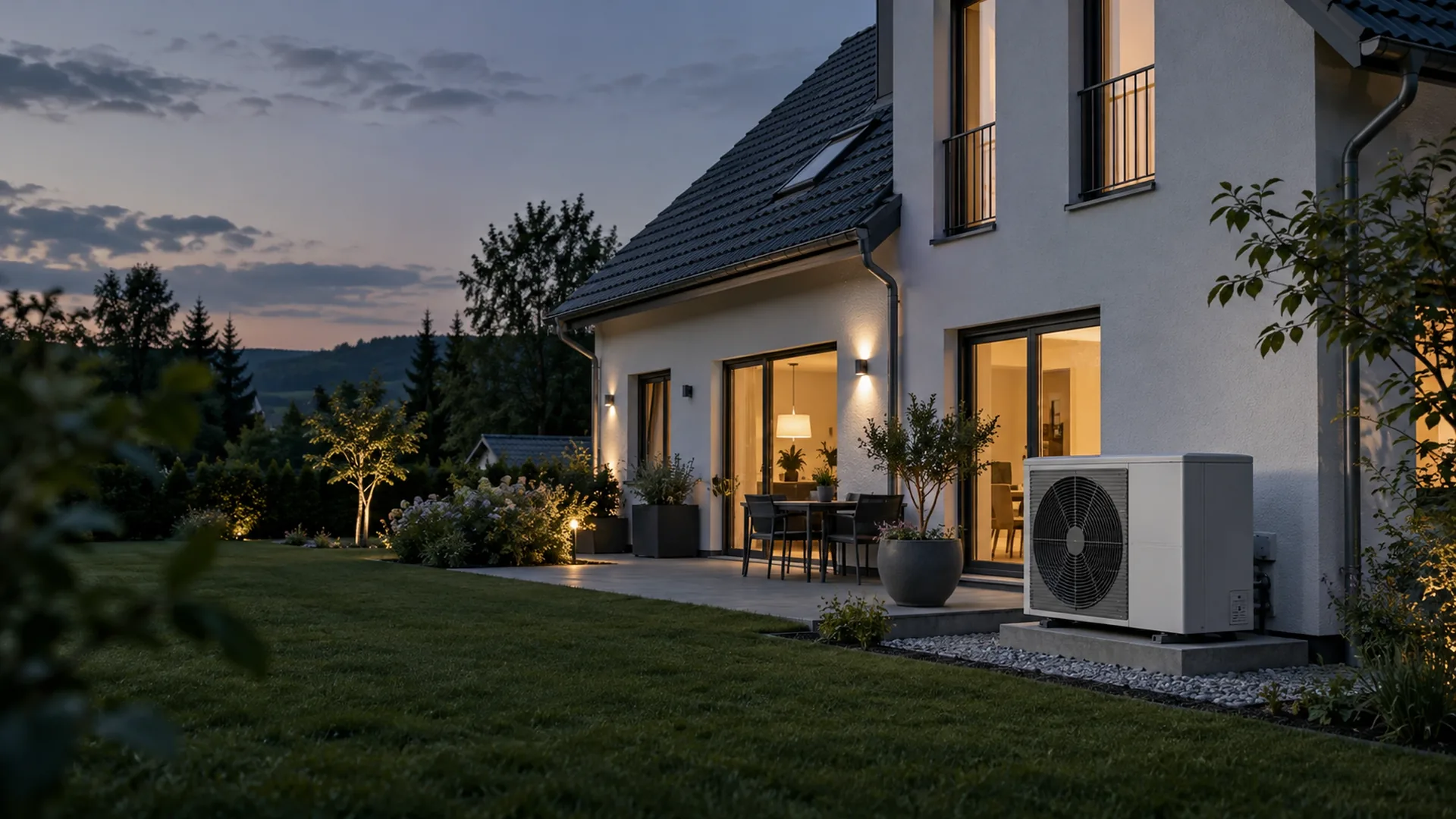
Under the directive, new buildings must be zero-emission buildings from 2030, and public buildings two years earlier, which in practice means heat pumps, district heating or other renewable heat rather than gas boilers.
Why this matters for heating pipe
Heat pumps run most efficiently at low flow temperatures, and the easiest way to deliver comfort at 35 °C instead of 70 °C is a large emitting surface: underfloor, wall or ceiling heating. Every square metre of floor heating at 150 mm loop spacing takes roughly 6.7 metres of pipe. As renovation and new-build rules push buildings towards low-temperature systems, demand for oxygen-tight, form-stable 16 and 20 mm pipe grows with them.
National rules will arrive unevenly. Distributors who supply several EU countries should expect different timelines and different subsidy rules from one border to the next during 2026 and 2027, and plan stock accordingly.
The SUSLiD view
Low-temperature heating is now policy, not preference. For floor and wall heating projects, tell us the loop spacing and floor area and we will size the coil lengths so that each loop runs without a joint.
Source: The Commission calls on EU countries to transpose the reinforced rules on the energy performance of buildings · European Commission, Directorate-General for Energy, 2026-07-15