Many buildings in Europe were designed for radiators supplied at up to 90/70 °C. That suits a gas boiler, but not a heat pump, whose efficiency falls as the supply temperature rises. An analysis from the REHVA Journal, published on the European Commission’s BUILD UP portal, sets out how to close that gap in renovation.
The first step is the envelope: better insulation and airtightness lower the heat load and let existing emitters work at lower temperatures. The second is the emitters themselves. Replacing conventional emitters with low-temperature emitters can raise the seasonal efficiency of inverter heat pumps by a further 30%. The largest savings come from moving to a 35/30 °C regime, typically with underfloor heating.
A renovation market for floor heating
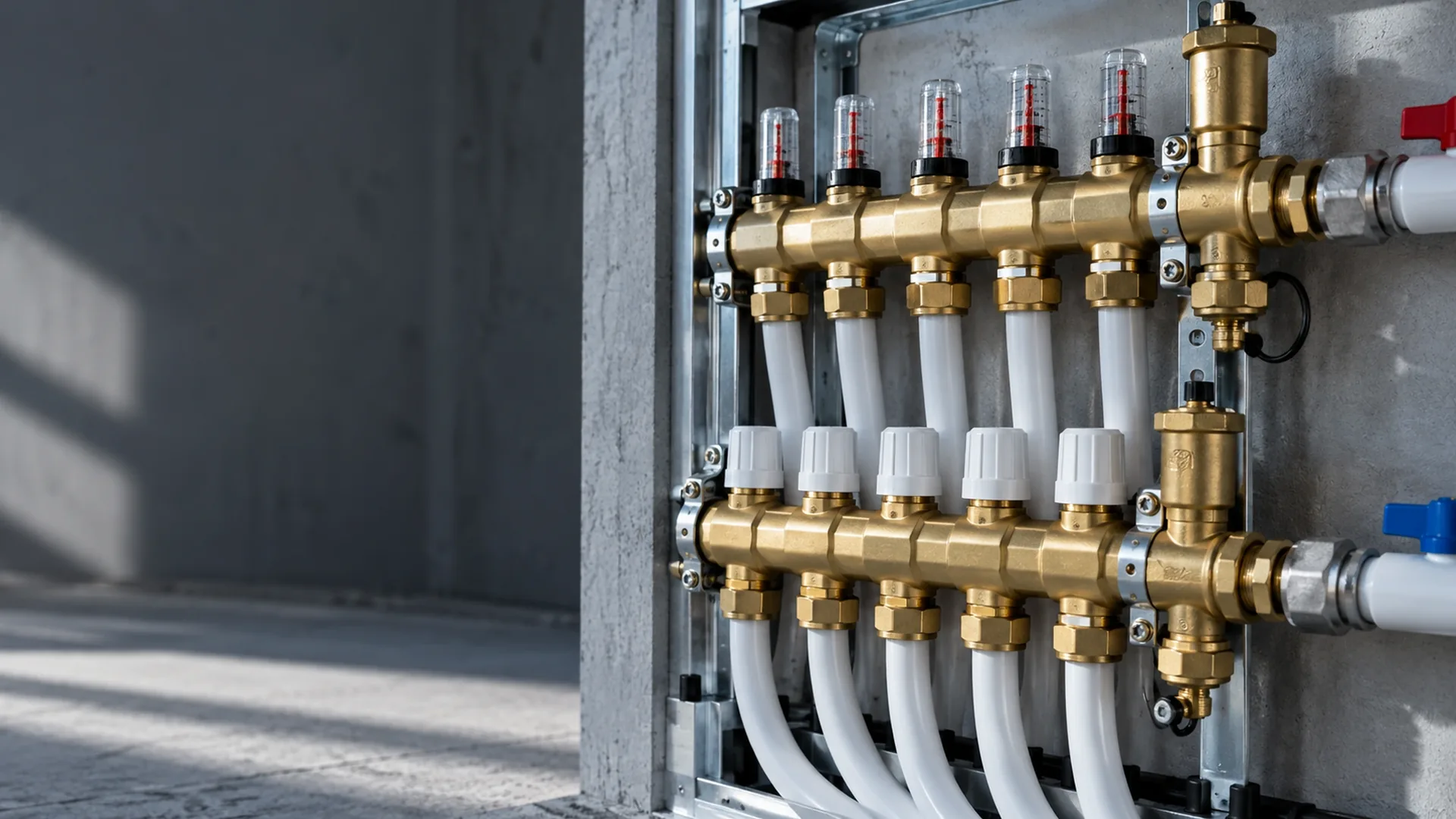
Retrofitting floor heating used to mean breaking out screed. Thin-layer systems, milled-in channels and dry boards now allow loops to be laid in a few centimetres, which makes the 35/30 °C route realistic in occupied homes. These systems rely on small-diameter pipe, often 12 to 16 mm, that bends tightly and stays where it is laid.
This is a natural fit for multilayer pipe. The aluminium layer gives it memory, so a loop bent by hand stays in shape without fixing every few centimetres, and it keeps oxygen out of a system that may now include an aluminium heat exchanger.
The SUSLiD view
Floor heating is moving from new build into renovation. Tell us the system type, whether wet screed, thin-layer or dry board, and we will recommend the pipe size, wall thickness and coil length that suit it.
Source: Lower temperatures, higher efficiency: the pivotal role of heat pumps · BUILD UP, European Commission, 2025-06-10