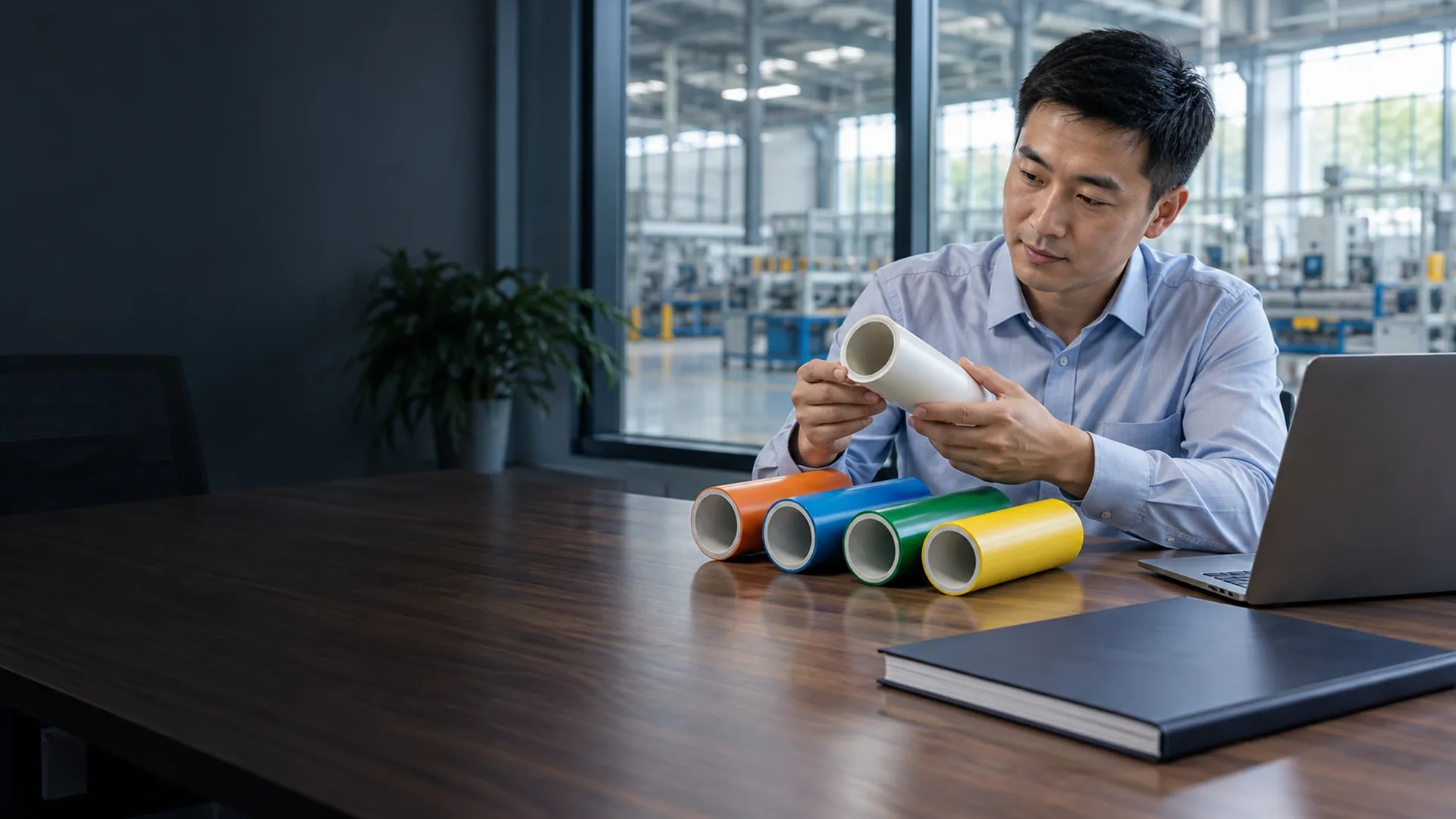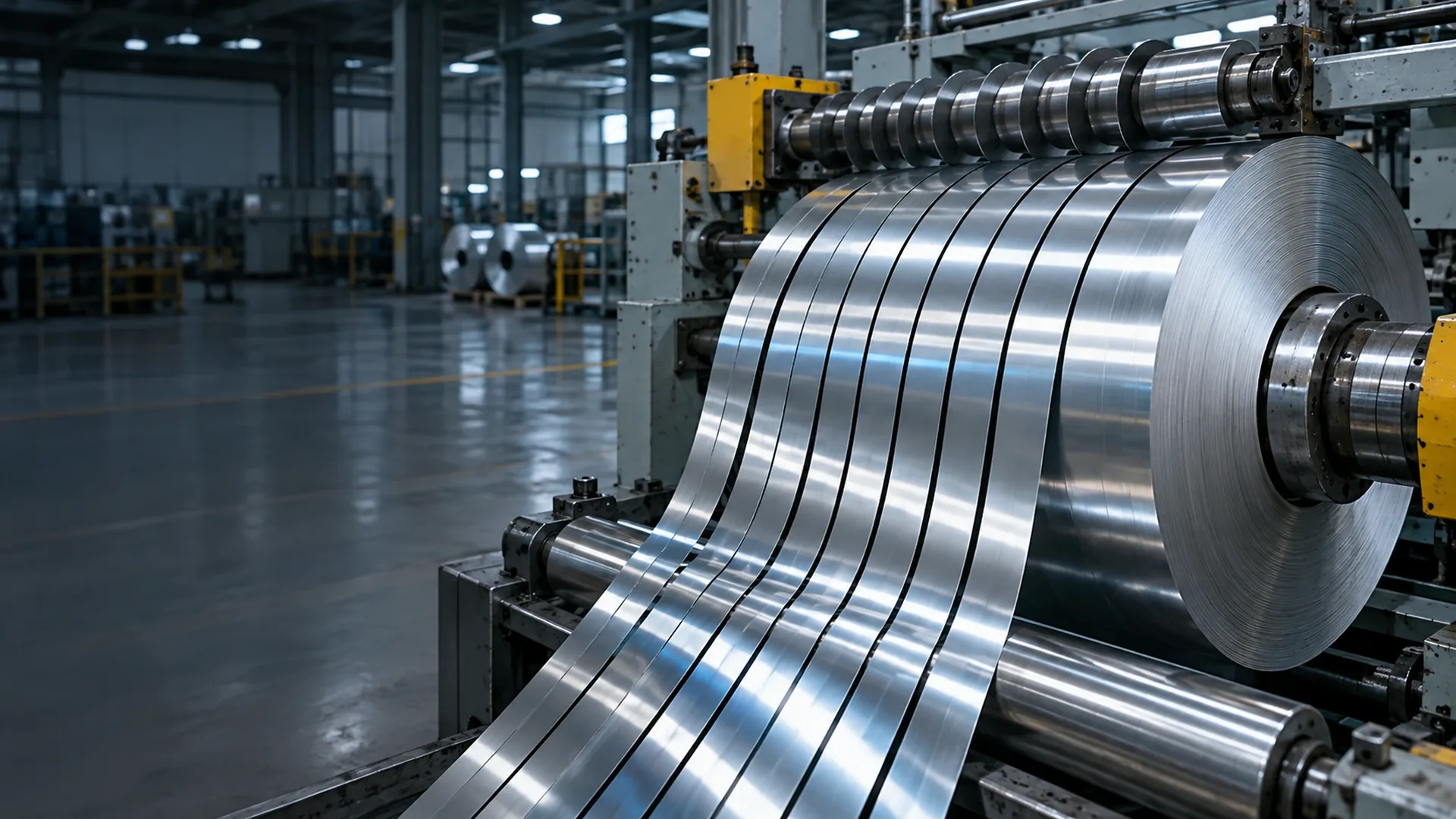
Aluminium processor Chenxing Aluminum has announced that it adjusted production to supply 8006 alloy strip for aluminium-plastic composite pipe. The company positions 8006 as giving higher tensile strength and steady welding behaviour compared with the more common 8011 grade, with width and thickness slit to each pipe maker’s requirements.
Why the aluminium grade matters
The aluminium layer is only 0.2 to 0.7 mm thick, yet it does three jobs: it is the oxygen barrier, it gives the pipe its shape memory, and it carries much of the pressure at high temperature. Both 8011 and 8006 belong to the aluminium-iron 8xxx family; 8006 has more iron and manganese, which raises strength. A stronger strip can allow a higher pressure rating at the same thickness, or the same rating with less metal.
There is a trade-off. Higher strength means more spring-back when an installer bends the pipe by hand, and welding parameters on the line have to be tuned to the alloy. For floor-heating coils, where bendability matters most, the grade and temper should be chosen together with the target bend radius.
The SUSLiD view
For heating coils, tell us the bend radius, coil length and any aluminium grade or temper requirement. For mains and risers, give us the diameter, the full temperature-pressure profile and the welding construction, and we will confirm the aluminium layer and send a sample.
Source: Chenxing Aluminum Rolls Out High-performance 8006 Aluminum Strip for Aluminum Plastic Composite Pipes · Chenxing Aluminum, 2026-10-09